

Wheel Throwing Class for Beginners
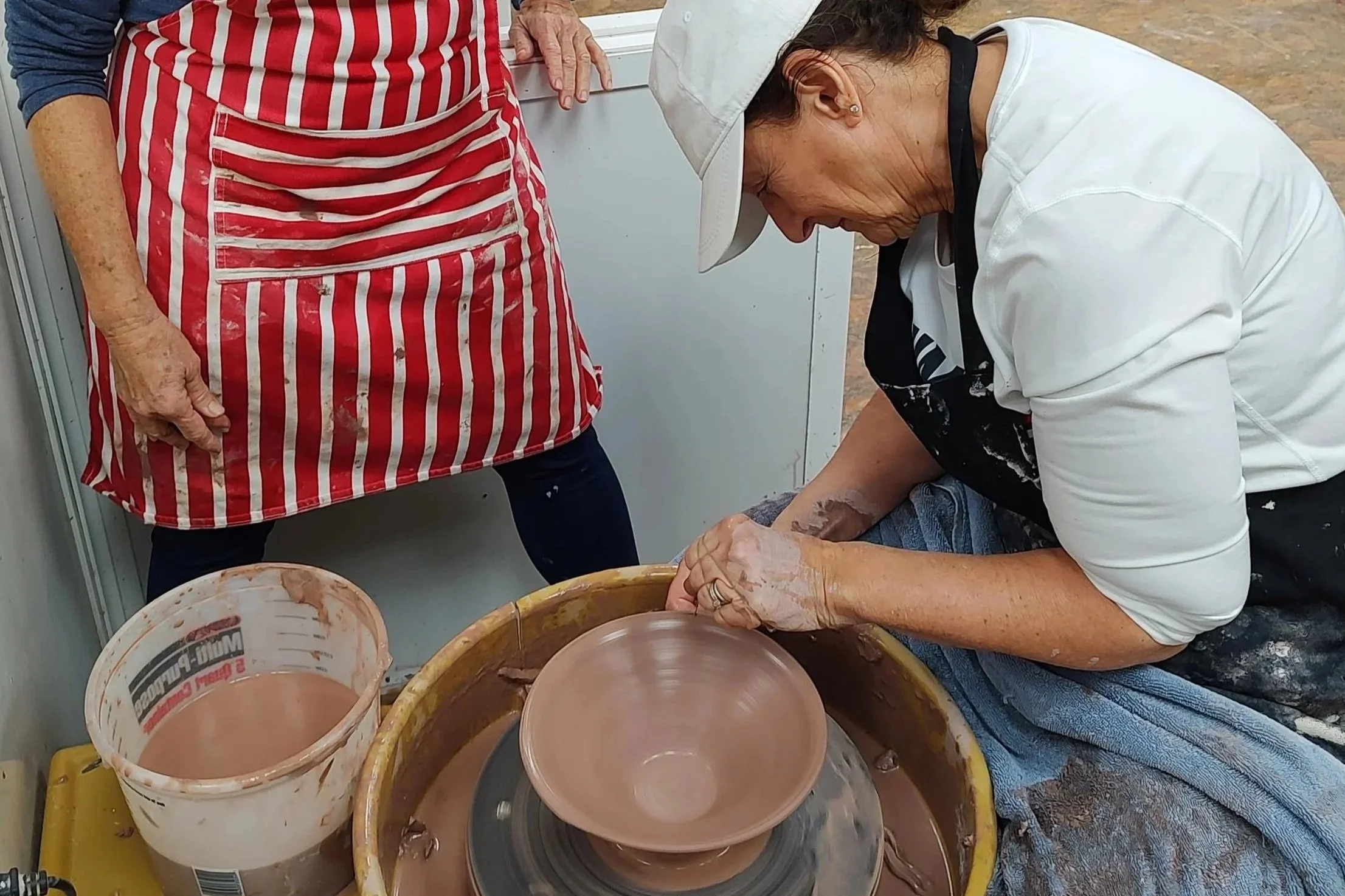
When you first feel a lump of clay start to rise beneath your hands, it becomes less about following instructions and more about building a connection with the clay.
It might wobble, lean, or even collapse just when you think you've got it. That's all part of a beginner pottery wheel class, and it's exactly what makes the experience so rewarding.
At Hilton Head Pottery, we believe wheel throwing encourages you to slow down, stay focused, and enjoy working with a lively and sometimes unpredictable material. Don't worry if you're completely new to pottery or your hands aren't perfectly steady. All you really need is an open mind, a willingness to get a little messy, and the patience to keep practicing.
What Happens in a Beginner Pottery Wheel Class?
A good first pottery class begins with some often-overlooked fundamentals: preparing the clay, sitting properly at the wheel, and learning to move your body smoothly without fighting the spinning motion.
Throwing involves much more than your hands and fingers. Your elbows, shoulders, posture, and rhythm all contribute to keeping the clay centered and under control.
Our instructors demonstrate each step before helping you try it yourself. You'll learn how to wedge and prepare the clay, secure it to the wheel head, control the wheel speed, and use just enough water to keep things moving.
Learning to Center Clay
Centering means guiding the clay into a smooth, stable mound that spins steadily without wobbling. For many beginners, it's the most challenging part of the first session—but it's also the foundation for everything that follows.
Once your clay is centered, you'll make an opening, establish the floor of your vessel, and gently begin pulling the walls upward.
Trying to make a tall cup in one heroic pull usually results in thin, uneven walls—or the always-dramatic slump. A shorter bowl, small cup, or simple cylinder is a much more realistic first goal.
Learn Pottery in a Working Hilton Head Studio
At Hilton Head Pottery, beginners learn in a hands-on, working pottery studio where clay is thrown, trimmed, decorated, glazed, fired, and discussed every day.
You'll often see studio members and experienced potters working alongside classes and moving pieces through different stages of the ceramic process.
That studio exposure is invaluable.
You're not merely making a keepsake for the day. You're getting a genuine introduction to pottery and a glimpse into the larger world of ceramics.
Expect Progress, Not Perfection
Many first-time students picture a neat collection of matching mugs by the end of class.
Occasionally, a beginner surprises themselves. More often, those first pieces are charmingly uneven, a little thicker than expected, or considerably smaller than planned.
That's normal—and it's certainly not failure.
The wheel teaches through repetition. Your hands gradually learn how much pressure to use, when to add water, how slowly to move, and perhaps most importantly, when to stop touching the clay.
You learn by feeling the clay wobble, correcting it, and recognizing that same sensation a little sooner the next time.
Even a Collapsed Pot Can Teach You Something
A collapsed pot provides valuable clues.
Maybe the clay became too wet. Perhaps the wall became too thin. Your hands may have moved at inconsistent speeds, or you simply asked the clay to do a little more than it was ready to do.
Our instructors help you understand those moments and develop the techniques needed to correct them.
That's one of the biggest advantages of taking an in-person pottery class rather than trying to learn the wheel entirely on your own.
YouTube can show you how someone else throws a pot.
An instructor sitting beside you can watch your hands, your posture, your speed, and your clay and help you understand what needs to change.
There's simply no substitute for that kind of one-on-one instruction.
What Should You Wear to a Pottery Class?
Pottery can get messy, so wear comfortable clothes you don't mind getting dirty. Hilton Head Pottery provides aprons for additional protection.
Avoid loose sleeves, bracelets, rings, or anything else that might interfere while the wheel is spinning. Tie back long hair, and closed-toe shoes are a practical choice in a working pottery studio.
And here's one piece of advice beginners don't always expect:
Trim your fingernails.
Long fingernails can become surprisingly frustrating when you're learning to throw. Keeping them reasonably close to your fingertips makes working with clay much easier.
What Do You Need to Bring?
Not much.
Hilton Head Pottery provides the essential materials for your class, including aprons, pottery tools, clay, and glazes.
Bring yourself, an open mind, and a willingness to get your hands muddy.
What Happens to Your Pot After Class?
Making a form on the pottery wheel is only the beginning.
Freshly thrown clay is soft and fragile. It needs time to dry before it can be trimmed, decorated, or have a handle attached.
Then comes firing.
Your pottery is first fired to become bisque ware. It's then ready to be glazed before returning to the kiln for its final firing.
Heat, glaze chemistry, clay thickness, and even placement within the kiln can influence the final result. The glaze you imagined as a vibrant blue, satin white, or beautifully speckled surface may emerge slightly differently than expected.
That uncertainty is part of the craft—and sometimes the unexpected detail becomes your favorite part.
Pottery also teaches an important lesson:
It isn't instantaneous.
A class gives you an immediate hands-on experience, but turning soft clay into finished ceramic work takes time and patience.
If you're visiting Hilton Head Island, keep that timeline in mind when planning for your finished pottery after firing.
Clay works on its own schedule.
How to Get More From Your Time at the Wheel
Give yourself permission to make simple forms.
A well-centered, sturdy little bowl is a bigger accomplishment than an ambitious vase that collapses at the finish line. Start by learning the process and feel of the clay rather than chasing a perfect Pinterest-style result.
Listen closely to your instructor's suggestions about water, too. Beginners often use too much because slippery clay initially feels easier to work with, but excess water weakens the clay and can cause walls to collapse.
Keep your movements calm and connected. Brace your elbows when instructed, keep both hands working together, and make one purposeful adjustment at a time.
Fast corrections tend to create more wobble. Slow, steady pressure gives you time to feel what the clay is doing.
Most importantly, don't compare your pot to the person sitting beside you.
One student may have drawn or sculpted for years. Another might have a natural feel for the wheel on day one.
Your most useful comparison is between your first ball of clay and your next one.
One-Time Pottery Class or a Longer Course?
It depends on what you want from the experience.
A one-time pottery wheel session can be a fun, creative outing for Hilton Head Island visitors, couples, friends, or anyone simply curious about working with clay.
You'll get a feel for the process, make a few attempts, enjoy the experience—and if it's that kind of evening, perhaps enjoy an adult beverage along the way. You'll also leave with a whole new appreciation for handmade pottery.
But if your goal is to actually learn how to throw pottery, our Beginning Wheel Class offers the time, instruction, and repetition needed to develop real throwing skills.
Repetition allows your hands to develop muscle memory, while your work has time to move through trimming, glazing, and other stages of the pottery-making process.
By the second or third class, centering often begins to feel a little less mysterious, and your pots start showing more control and intention.
What Happens When You Catch the Pottery Bug?
It happens more often than you might think.
You sign up for a pottery class because it sounds like something fun to try.
Then you find yourself thinking about clay on the drive home.
For Hilton Head Island residents and Lowcountry potters who catch the pottery bug, continued classes, Open Potter's Wheel, and studio memberships provide opportunities to practice, improve your skills, and spend time with a community of like-minded potters.
With practice, the wheel becomes more familiar, and the pottery studio can become more than a place where you make pots.
It becomes a place to slow down, recharge, work with your hands, spend time with creative people, and leave some of the stresses of everyday life at the door.
Let the Clay Teach You Something
A beginner pottery wheel class isn't a test of whether you're naturally talented.
It's an invitation to work with your hands, accept a few imperfect outcomes, and experience that remarkable moment when a spinning lump of clay begins to become something you created.
Come ready to participate.
Laugh at the wobbles.
Celebrate your successes.
Learn from the collapses.
Then grab another ball of clay, sit back down at the wheel, and throw with intention.
Ready to Try the Pottery Wheel on Hilton Head Island?
Whether you're a Hilton Head Island local, a Lowcountry resident, or visiting the island and looking for something creative to do, Hilton Head Pottery offers a welcoming place to discover what working with clay is all about.
Come get your hands muddy.
Your first pot probably won't be perfect.
That's exactly why you should make a second one.